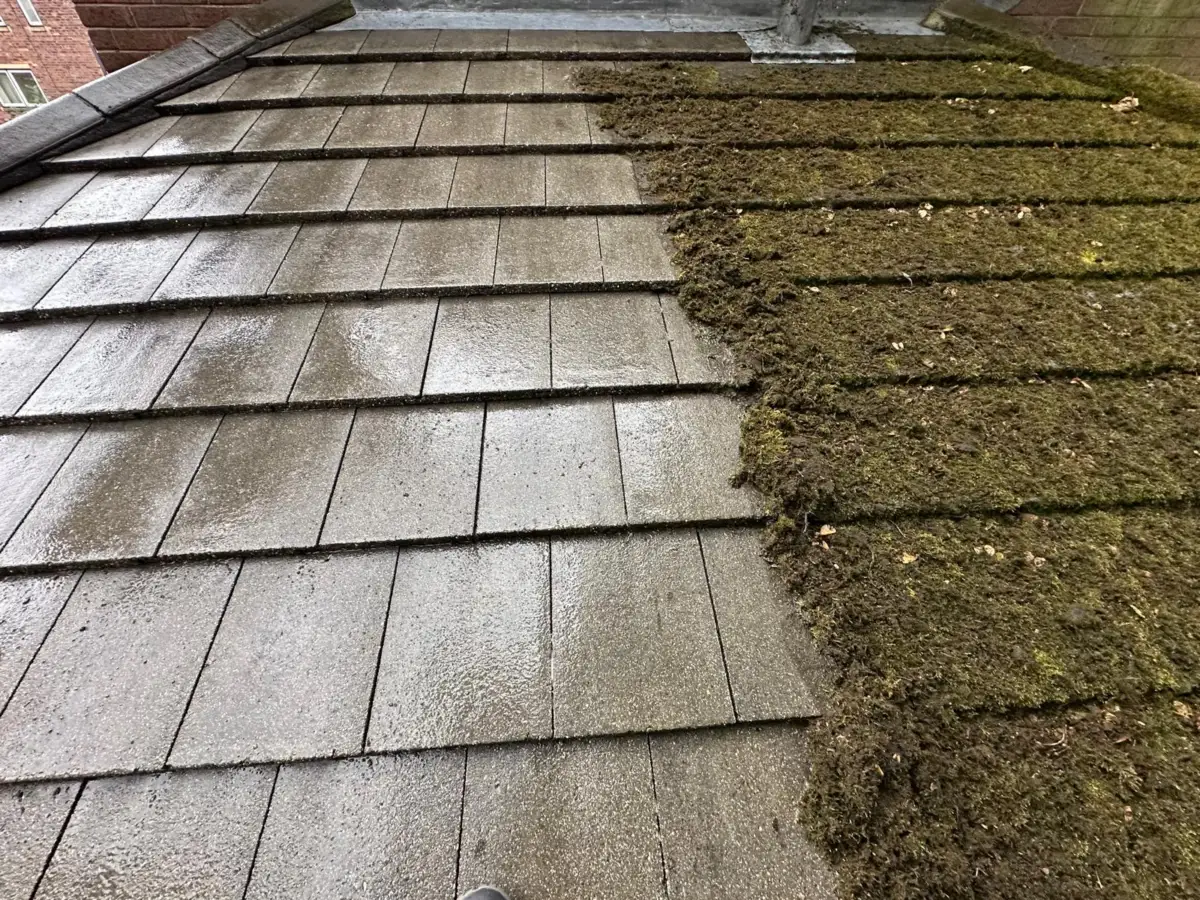
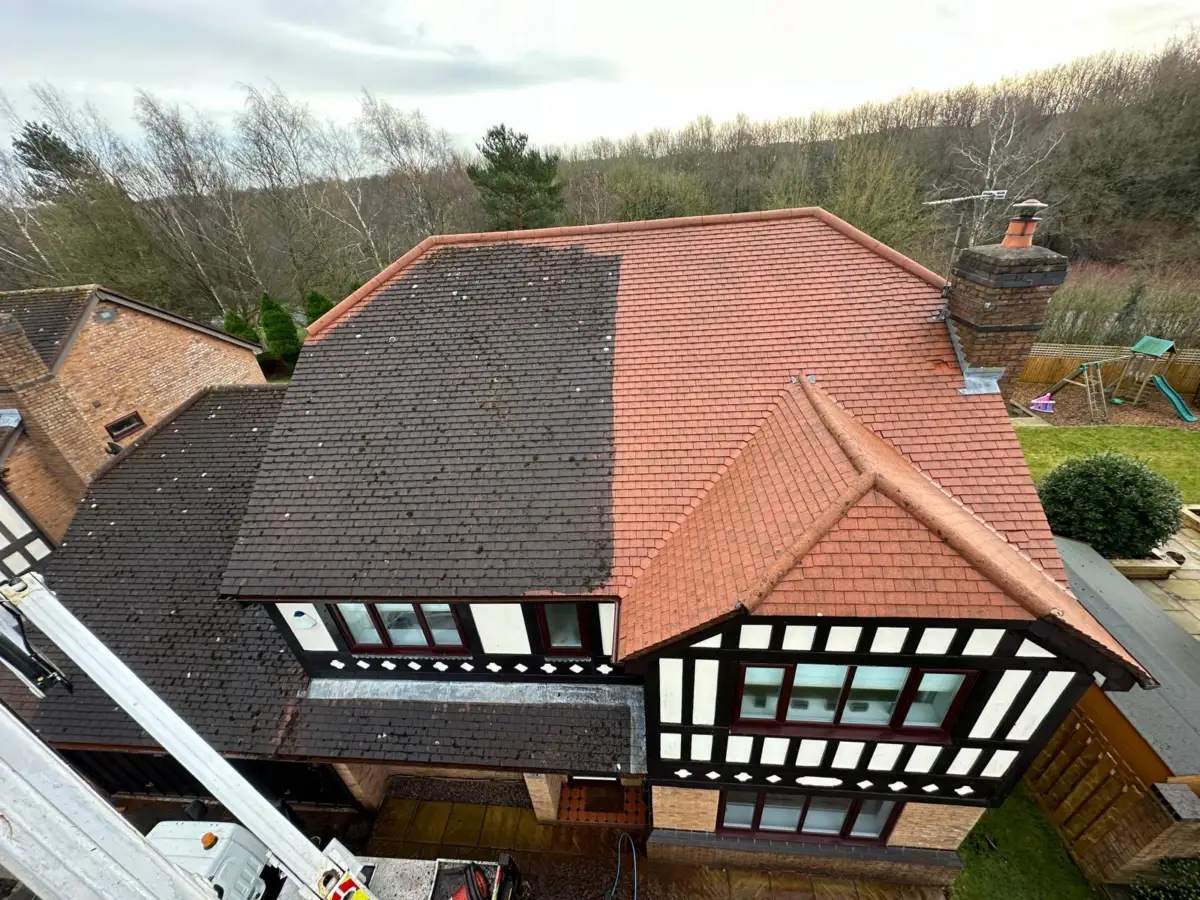
Plan the connections between the jobs
A roof clean, a window clean and a patio clean can each have a clear scope while the overall plan still contains a gap. Who removes collected debris before the paving receives its final clean? Does the window cleaner know another contractor may still be working above the glass? Who confirms that an access route is ready for use again?
For a Wirral home, start with the property and the work you actually want considered. There is no need to book every exterior service together. This guide gives you a coordination worksheet, rather than a fixed cleaning order that every contractor must follow.
Resolve condition and access questions first
Known leaks, loose components or damaged surfaces need the appropriate assessment before optional appearance work is arranged. Our guide to cleaning versus roof repairs explains that distinction. Cleaning does not establish that a roof is sound.
Ask each contractor what must be ready before their task begins and what their work could affect afterwards. A shared side passage, equipment position or conservatory below the house roof may change the programme. Do not assume one contractor can use another trade’s access equipment.
Do not climb onto a roof, conservatory or ladder to complete this worksheet. HSE explains that fragile surfaces require proper professional planning. An incomplete view is a reason to ask a question, not to obtain a risky photograph.
Use a four-column planning sheet
Put only the tasks you want into the table. The entries below are questions to agree with the providers, not descriptions of a standard package.
| Work being considered | What must be agreed first? | What could affect a later task? | Who confirms completion? |
|---|---|---|---|
| House-roof cleaning | Suitability, known defects, access and the actual roof areas | Equipment, collected debris, nearby glass and lower surfaces | The roof-cleaning provider confirms agreed collection, exclusions and any follow-up |
| Gutter-related work | Whether the request concerns internal clearance, outside faces or a reported fault | Collection arrangements and any unresolved repair question | The responsible provider records what was completed and what remains separate |
| Windows and frames | Which glass, frames and finishes are included | Later work above or beside the finished surfaces | The window cleaner confirms the agreed finishing visit |
| Patio or driveway cleaning | Surface type, condition, jointing and product instructions | Later equipment traffic or separate joint-care work | The paving cleaner confirms the clean and any agreed follow-on requirements |
Agree when each surface receives its final finish
A useful planning question is: “Will any later job disturb this finished surface?” If so, ask whether its finishing visit should move, whether protection is appropriate, or whether a return visit needs to be included. The contractors need to decide what works for the actual methods and property.
For example, a homeowner considering roof work above a rear patio might provisionally arrange the final patio and glass finishing after the relevant overhead work and debris collection. That is an illustrative dependency, not a rule that paving must always be cleaned last. Access needs, product requirements or separate repairs can change it.
Do not turn this sequence into a promise that all work can happen in one day. Weather, a treatment’s instructions or a newly identified condition issue may require a different date. Ask who will tell the other providers if an appointment changes.
Keep material instructions attached to the plan
Different surfaces should keep their own care requirements even when one company is discussing several jobs. Eurocell’s care guidance distinguishes uPVC frames, decorative finishes, cladding and roofline products, and cautions against damaging cleaners or methods. Its advice concerns its products; check the instructions for your own installation.
Marshalls’ paving guidance also makes joint care part of the discussion: loss of jointing material during cleaning may require appropriate reinstatement. Ask whether any such follow-on work belongs in your proposal and who would complete it. Do not assume a clean includes sealing, re-jointing or repairs.
Record the product name or installer information if you already have it. Where the material or finish is unknown, write “not confirmed” and ask what assessment is needed. Avoid selecting a stronger cleaner simply to keep the programme moving.
Use one short handover message
Keep the agreed order, contacts and outstanding actions together. Suggested wording:
“We are discussing roof cleaning, an exterior window clean and a rear patio clean. Please confirm which surfaces your work may affect, what must be completed before the next visit, and any follow-up or access restrictions. Let us know if the proposed order changes before we confirm the remaining appointments.”
This is sample wording, not a customer account. Add the actual work areas and agreed dates. Each provider should confirm its own scope; forwarding a timetable does not extend a quotation or authorise extra work.
Start with the roof if that is your main concern
Explore our roof-cleaning service in Wirral, or send a postcode and short description to discuss an assessment. The service is provided by Just Clean Property Care. If you are considering other exterior tasks, name them separately and ask the team to confirm which services and arrangements are available.
Our ground-level photograph guide can help show the work and surrounding space. You can enquire without photographs if the views are unavailable.
Sources and limits
The worksheet and example sequence are editorial planning aids. They do not specify cleaning equipment, chemicals, safe access or an individual property’s work order. References: HSE: fragile surfaces; Eurocell: product care and maintenance; Marshalls: paving technical information. Follow the relevant product instructions and the competent providers’ agreed plan.